
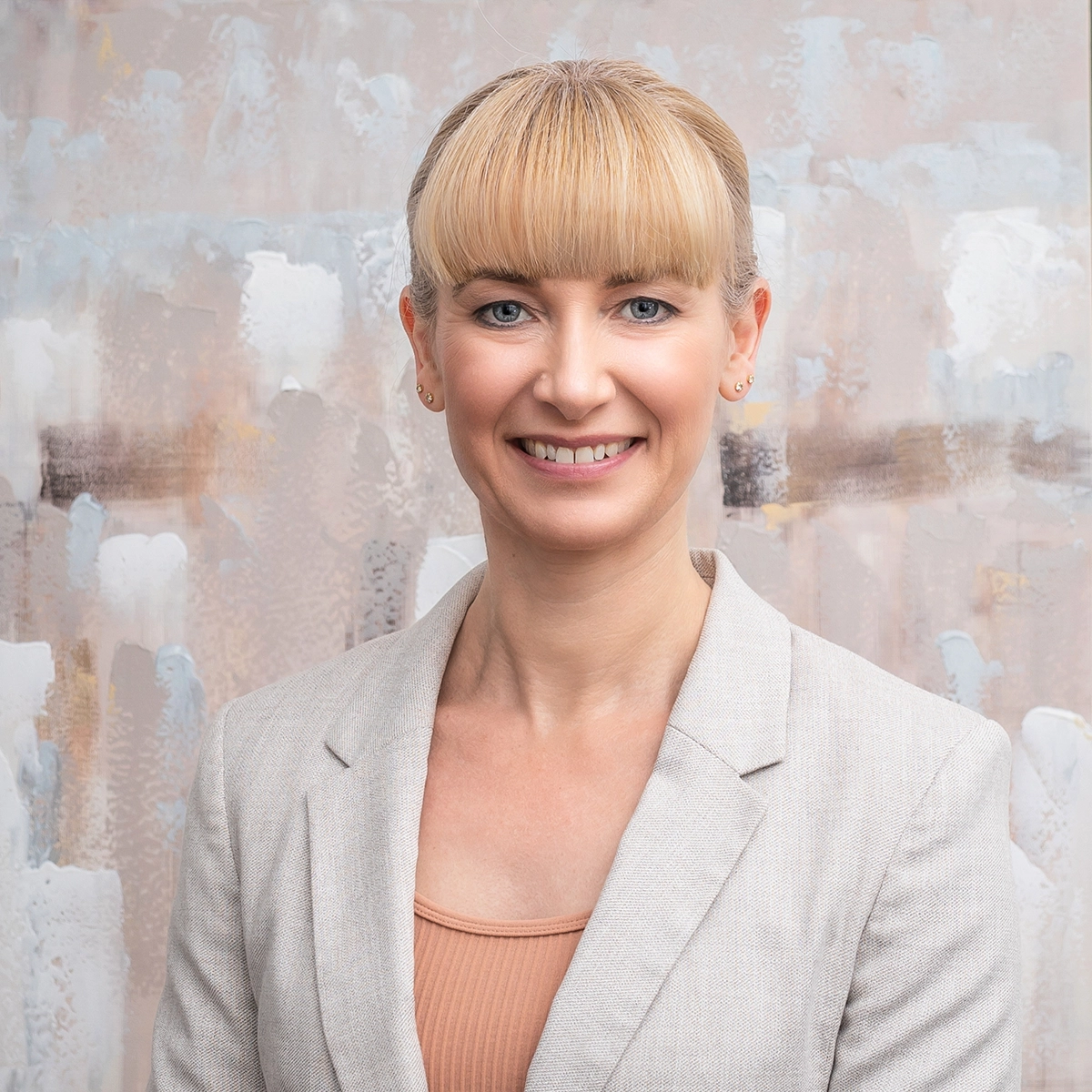
Danielle
Little TEP
Founder and Principal

Danielle has worked in law since 1992. She spent most of those years working alongside lawyers before she eventually became one herself.
Bathurst, 1992
She started in Bathurst, a regional city with a legal profession as old as Sydney’s, working for partners at King Cain and at McIntosh McPhillamy & Co.
These were senior lawyers of a generation that did not run mentoring programs. You were expected to get it right, to know why it was right, and to have thought about it before you walked in the door.
It was a hard school and an excellent one. What it left behind is precision, preparation, and no tolerance for approximation. Those are still the habits this firm runs on.
Brisbane, 2003
Danielle moved to Brisbane in 2003 and joined a large multinational plaintiff firm as a senior legal assistant, later a paralegal, working in medical negligence and personal injury.
This is the part of the story most lawyers don’t have. She spent years inside serious litigation before she became a lawyer – close enough to see exactly how matters get built, where they fall apart, what actually persuades a court, and how much of an outcome is decided long before anyone walks into one. She was learning the craft from the inside, without the pressure of simultaneously performing it.
The detour that turned out to matter
From October 2009 to January 2013, Danielle stepped out of law entirely and ran the School of Dentistry at Griffith University.
It’s an unusual line in a lawyer’s CV. It’s also more relevant than it looks. Running a university school means governance, policy, and public sector accountability. It means reading the constitutional documents of an organisation and understanding what they permit, rather than what everyone assumes they permit.
Which happens to be the problem at the heart of most estate plans that go wrong. Someone tells us who should receive the business. The company constitution, or the trust deed, says something else entirely.
She returned to law in 2013, back to medical negligence.
Admitted as a lawyer, 2014
Danielle was admitted as a lawyer in 2014, twenty two years after she first walked into a law firm.
Her first role as a lawyer involved a work transfer to Coffs Harbour in 2015 and involved blended areas of practice. Half of it was estate litigation. The other half was compulsory land acquisition – acting for farmers on the NSW north coast whose land was being resumed for the Pacific Highway upgrade.
That work set a pattern that had, in truth, been running through everything already. On one side, a family. On the other, an institution with more resources, more experience, and no particular urgency about any of it.
The job was to make sure the outcome was fair anyway, ensuring farming families got appropriate compensation for what they lost, and in some instances enabling them to have a completely new start elsewhere.

Wills and Estates, and nothing else, from 2017
In April 2017 she transferred back to Brisbane to work in wills and estates exclusively. She hasn’t practised in any other area of law since.
By then she had spent more than eleven years at the same firm, across two stints and three roles, and had been contemplating the same issue for a long time. A large practice runs on billable hours. When what’s best for the client and what’s best for the firm point in different directions, all the weight sits on one side, and it is the individual lawyer who has to resolve that, quietly, over and over again.
Moving to another large firm would have meant the same arithmetic under a different letterhead. So she did something different – and Little Estate Lawyers opened in October 2018.
How she works
Most estate lawyers do planning or they do disputes. Danielle does both, and the second changes how she does the first.
Years of watching wills get pulled apart in court teaches you that a will isn’t only a document. If it’s ever challenged, it becomes evidence. The court’s questions aren’t really about what the will says. They’re about whether the person had capacity, whether they acted freely, whether anyone leaned on them, and whether they understood what they were signing. And then – whether any of that can now be proven.
So when Danielle prepares an estate plan, the documents are half the work. The other half is the file behind them. Notes written at the time, an assessment of capacity, a record of who was in the room and what was advised. Most of it is never read again. On the occasions it is, it’s often the thing that decides the outcome.
Trained to resolve, not only to argue
Along the way Danielle also completed nationally accredited mediator training, focused specifically on wills and estates.
She did it for a practical reason. A litigator who only knows how to litigate is carrying one tool. The overwhelming majority of estate disputes never reach a courtroom – they end in a negotiated outcome – and understanding how those outcomes are actually reached makes you considerably better at getting there. What moves people. What entrenches them. When to push, and when pushing costs your client money for nothing.
It’s a large part of why the firm’s reputation among opposing lawyers is for resolving matters rather than escalating them.
Recognised by the people across the table
In estate disputes, the people who know a lawyer’s work best are usually the people opposing it. Both of the recognitions below come from that group.
Danielle has been recommended in Doyle’s Guide for Wills & Estates Litigation in Queensland every year since 2023, and the firm every year since 2022. Those rankings are voted by the Queensland legal profession.
In April 2026, Danielle was named in the 2027 edition of The Best Lawyers in Australia for Trusts and Estates. Best Lawyers has published peer-reviewed rankings since 1983. The 2027 edition drew on evaluations from other practising lawyers and recognises the top 4.8% of the profession nationally.
Neither list can be bought, applied for, or lobbied. Both are decided by other lawyers.
Outside the practice
Danielle was a committee member of the Australian Lawyers Alliance in 2019 and presented at their national conference that year. She has served a term on the sub-committee of STEP’s Queensland branch.
She’s been a member of BNI since 2021, where she has twice served as chapter President – of the BNI Alliance chapter and the BNI Oasis chapter – along with a number of other committee and leadership roles.
And she teaches, constantly. There’s a large library of free material she’s produced across YouTube, Spotify, Apple Podcasts, Amazon Music, Instagram and Facebook, covering the questions people ask most about wills, estates and disputes.
It takes a great deal of time to make. It’s free, and it’s there whether you ever become a client or not.
Qualifications and accreditations
- Bachelor of Laws, Queensland University of Technology
- Master of Laws (Applied Law), majoring in Wills and Estates, The College of Law
- Nationally Accredited Mediator Training Program – Wills and Estates, The College of Law
- Graduate Diploma of Legal Practice, The College of Law
- Legal Practice Management Course, The College of Law
- Diploma of Human Resource Management, Western Institute of TAFE
- TEP – Trust and Estate Practitioner, the designation awarded by STEP, the Society of Trust and Estate Practitioners, the international professional body for practitioners in this field